
Something Is Not Right
All options include the full track download.
Support levels are optional and appreciated.
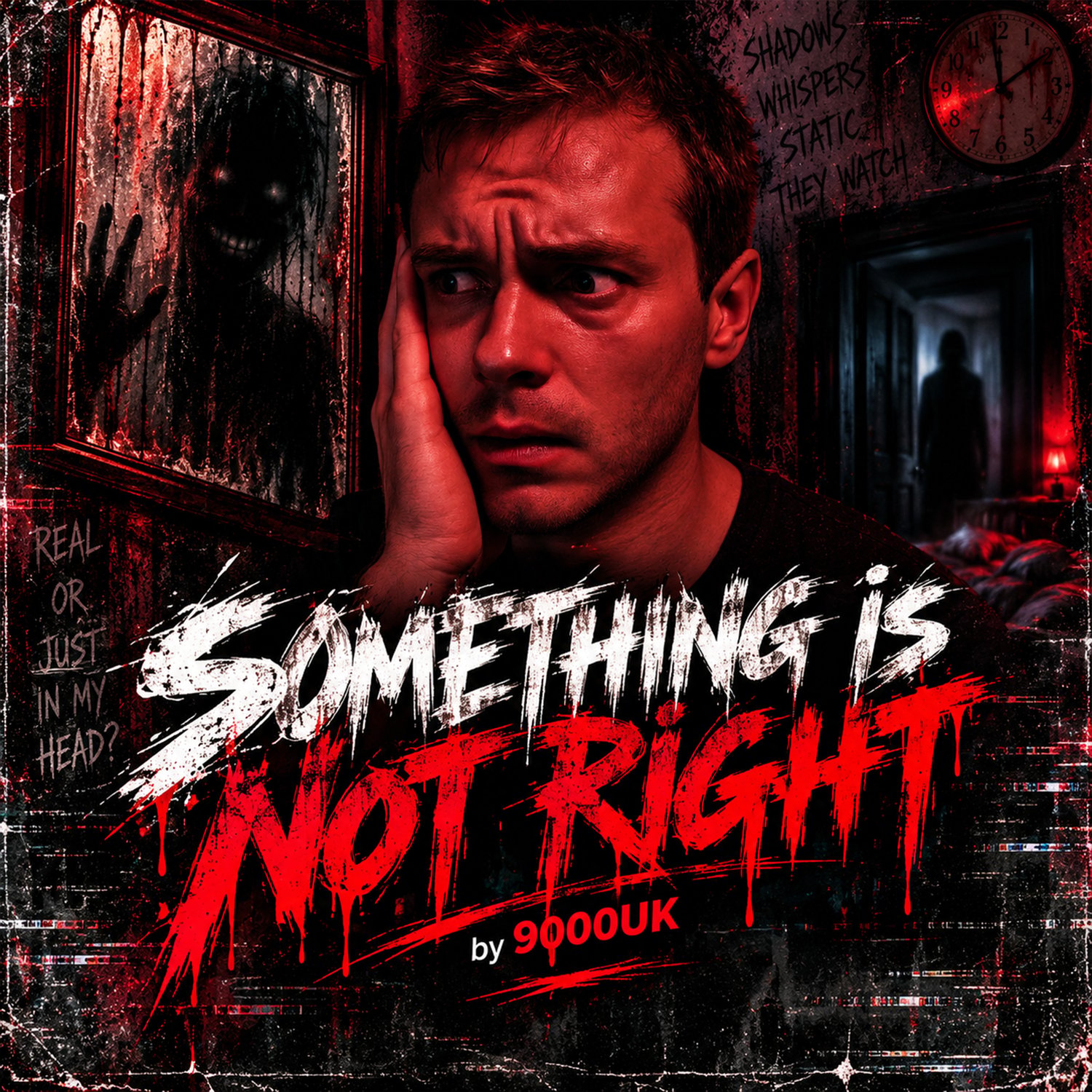
Something Is Not Right is a dark trap narrative built around the terrifying experience of sensing an unseen presence without being able to identify its origin or escape its influence. Through unsettling domestic imagery, distorted perceptions and escalating paranoia, the lyrics follow a narrator whose familiar surroundings gradually become threatening and unrecognisable. Ordinary objects behave in impossible ways, time loses its reliability and the boundary between external danger and psychological distress becomes increasingly uncertain. The song draws its tension from this ambiguity, leaving open whether the protagonist is confronting something supernatural, experiencing a breakdown in perception or becoming trapped within a fear that feeds upon itself.
The introduction establishes the central sensation before any specific threat appears. The narrator knows something feels wrong but has no explanation for the feeling. This instinctive awareness becomes the foundation of the story, suggesting that fear sometimes begins before the mind has identified a recognisable danger. The short, fragmented declarations create an immediate impression of alarm, preparing the listener for a sequence of disturbing encounters.
The first verse transforms an ordinary home into a setting of psychological horror. Shadows move across the ceiling when the narrator blinks, while silhouettes appear in the kitchen sink. These details make familiar spaces feel unreliable. The kitchen, normally associated with routine and domestic safety, becomes a place where unexplained figures seem to appear. The narrator's surroundings have not visibly changed in any conventional sense, yet the experience of occupying them has become profoundly unsettling.
The reference to midnight introduces a traditional association with darkness and vulnerability, but the more disturbing detail is the narrator's inability to move. Although every instinct urges escape, the body remains rooted in place. Uneven breathing suggests an immediate physical response to fear, while the contradiction between wanting to flee and remaining motionless introduces a recurring theme of helplessness.
The verse intensifies through sensory contradictions. Footsteps echo without corresponding movement from the floor, voices emerge from static and lights flicker as the narrator's pulse accelerates. Each unexplained event undermines another assumption about how the environment should behave. The dark figure appearing in the mirror provides the verse's most confrontational image. A reflection normally confirms a person's identity and physical surroundings, yet here it introduces an unfamiliar presence that appears to grow more threatening. The mirror becomes a point where the narrator's sense of reality begins to fracture.
The first chorus translates these disturbances into an overwhelming physical and emotional experience. Coldness in the middle of a July night creates an unnatural contrast between expected warmth and inexplicable discomfort. A heartbeat compared to gunfire conveys the intensity of panic, while difficulty breathing and the inability to see light suggest increasing desperation. Whispers within the walls imply that the threat has penetrated the structure of the home itself.
The suggestion that something in the darkness does not fear light is particularly significant. Light traditionally offers safety by exposing what darkness conceals. In this narrative, even illumination appears insufficient. The narrator is confronted with a presence that seems unaffected by the usual means of revealing or confronting danger. The repeated title becomes an increasingly urgent recognition that the situation has moved beyond ordinary explanation.
The second verse expands the disturbance from physical surroundings into technology, communication and time. A cracked phone receives calls from numbers the narrator never dialled, while names disappear into darkness. These details suggest an invasion of personal boundaries, as though private devices and familiar connections have become part of the threatening environment. The phone, normally a means of reaching others, offers no clear reassurance.
The narrator's decision to sleep with a blade introduces a defensive response to perceived danger. Yet the accompanying dreams of a pit suggest that the fear continues during sleep, removing the possibility of psychological rest. Voices urging escape are met with inaction and submission. This moment deepens the earlier image of paralysis, showing a protagonist whose awareness of danger no longer translates into an effective response.
Ink appearing on an untouched page and a clock behaving incorrectly extend the story's sense of impossible events. Writing and timekeeping, two familiar methods of recording reality, become unreliable. The neighbours' unnaturally wide eyes introduce another disturbing possibility: even other people no longer seem entirely human or trustworthy. Their refusal to blink turns a mundane social encounter into something menacing, leaving the narrator increasingly isolated.
The repeated chorus reinforces the growing conviction that the threat is persistent and inescapable. What began as a series of strange observations has developed into a continuous atmosphere of dread. The narrator's inability to understand the experiences becomes as frightening as the experiences themselves.
The bridge changes the focus from individual incidents to the possible nature of the unseen force. Static and electrical wires suggest that it moves through the systems surrounding the narrator. The claim that it feeds on panic gives the presence an almost parasitic quality, implying that fear strengthens whatever is being experienced. Its ability to remain silent while communicating through screams creates another contradiction, reinforcing the sense that ordinary logic no longer applies.
The insistence that the experience is not a dream reveals the narrator's growing need to defend the reality of what has been witnessed. This declaration does not settle whether the danger is supernatural or psychological. Instead, it demonstrates how completely the experience has taken hold of the protagonist's perception.
The final chorus introduces a decisive shift. Earlier repetitions focused primarily on strange phenomena occurring within the home. Now paranoia is named directly, and the threat begins moving inward. Eyes seem to surround the narrator, prayer offers no apparent relief and attempts to fight or scream fail. The language becomes less concerned with locating an external figure and more focused on the sensation of losing control.
The reference to something clawing at the darkness of the narrator's soul provides the story's most intimate and disturbing image. The danger is no longer confined to mirrors, walls, telephones or shadows. It appears to have reached the narrator's inner world. This progression allows the lyrics to be read as a supernatural haunting, a portrayal of extreme paranoia or an exploration of how fear gradually consumes a person's sense of security.
The closing whispers fragment the title into isolated words, leaving the central warning unresolved. There is no explanation, confrontation or escape. The narrative ends with the same recognition that opened it, but the meaning has changed. What initially seemed like an uneasy suspicion has become an all-consuming conviction.
Something Is Not Right uses the language of dark trap to construct a compact psychological horror story through repeated warnings, surreal details and mounting sensory disturbance. Its distinctive imagery combines domestic spaces, malfunctioning technology, unnatural reflections and bodily panic to create a world where every familiar point of reference becomes questionable. The song's power lies in its refusal to identify the source of the terror, allowing the unknown itself to remain the central antagonist.
The final impression is of a narrator caught between fear of an external presence and fear of losing command over the mind. By withholding a definite answer, the lyrics leave the listener inside the same uncertainty as the protagonist, where the only remaining certainty is the repeated conviction that something is profoundly wrong.