

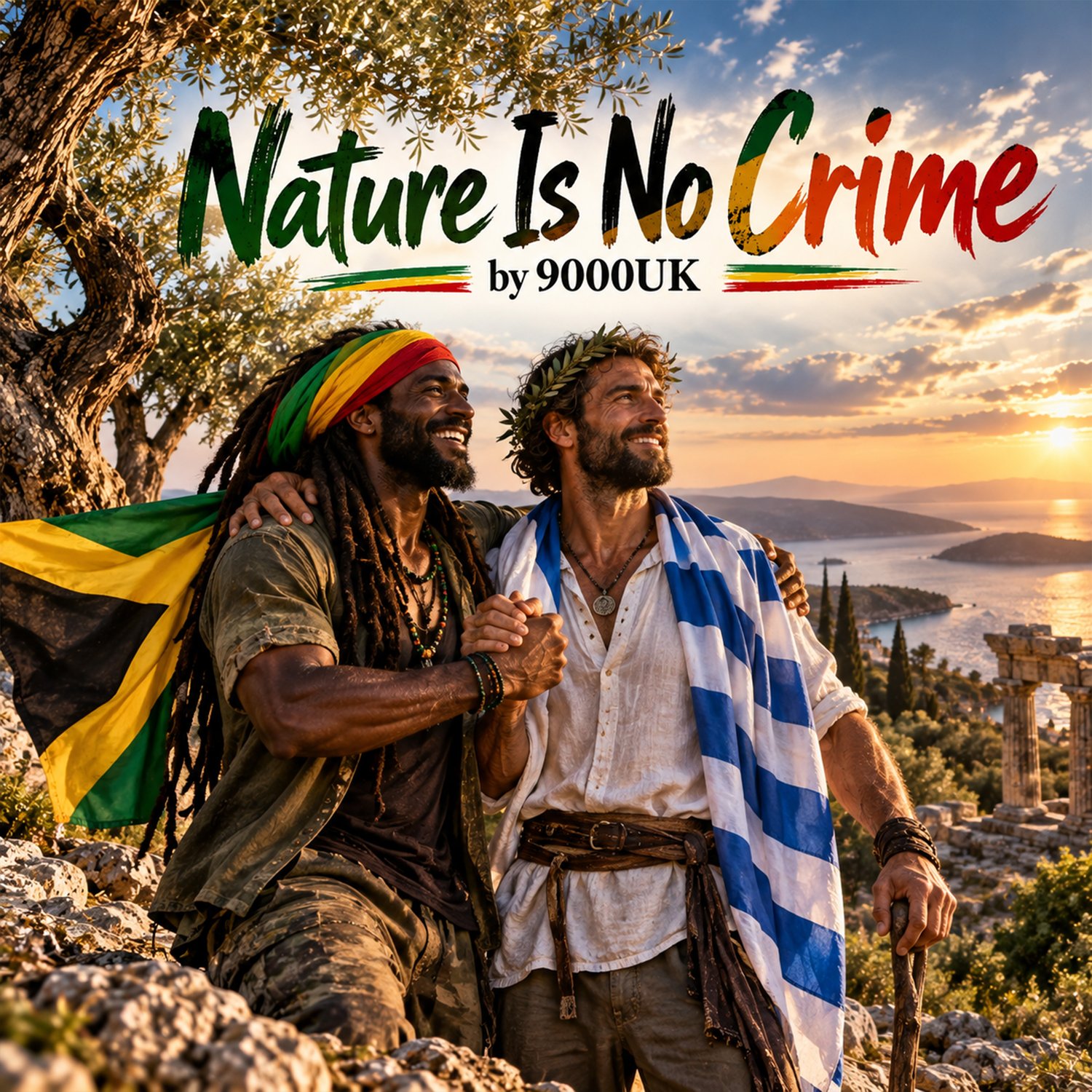
Nature Is No Crime
All options include the full track download.
Support levels are optional and appreciated.
“Nature Is No Crime” is a roots-conscious reggae statement that confronts the growing contradiction between modern systems of control and the natural freedoms of the earth. Through vivid imagery and pointed questions, the song challenges the idea that land, water, movement, and natural existence can be owned, restricted, or criminalised without eroding the very meaning of freedom.
The intro immediately frames nature as sacred and communal, not institutional. By questioning how trees can be judged like sinners, the song establishes its core argument: when nature is regulated as wrongdoing, morality itself becomes inverted. The earth is presented as a living presence that predates borders, states, and laws.
Verse 1 focuses on dispossession and restriction. Riverbanks become zones, soil is marked and gated, and access to land is framed as permission-based rather than inherent. Walking barefoot on “sacred ground” becomes an act of resistance, reconnecting the individual to creation’s timeless rhythm. The verse challenges authority by asking who has the right to decide when natural elements become “wrong”.
The pre-chorus sharpens the philosophical tension. If sunlight, rivers, and open air require approval, then freedom is exposed as a hollow concept. These lines turn environmental regulation into a moral inquiry, questioning not just policy but legitimacy.
The chorus delivers the song’s central declaration with clarity and force. By stating that freedom is an illusion where nature is penalised, the song strips away political language and reframes liberty as inseparable from the natural world. Seas and skies are invoked as symbols of forces that cannot truly be owned or restrained, reinforcing the futility and arrogance of control.
Verse 2 expands the critique to capitalism and exploitation. Borders are drawn across open plains, life is reduced to profit, and “order” is used as justification for extraction. In contrast, planting seeds becomes a quiet but powerful act of defiance, symbolising continuity, hope, and responsibility. The question of mountains becoming contraband underscores the absurdity of criminalising existence itself.
The outro resolves the song with grounded conviction rather than anger. Freedom is reclaimed not through legislation but through reconnection—to land, soul, and breath. The final lines make the message unmistakable: if nature is not free, humanity cannot be either.
Overall, “Nature Is No Crime” stands as a modern roots reggae manifesto—environmental, spiritual, and political—asserting that true freedom begins where the earth is respected, not regulated into silence.