

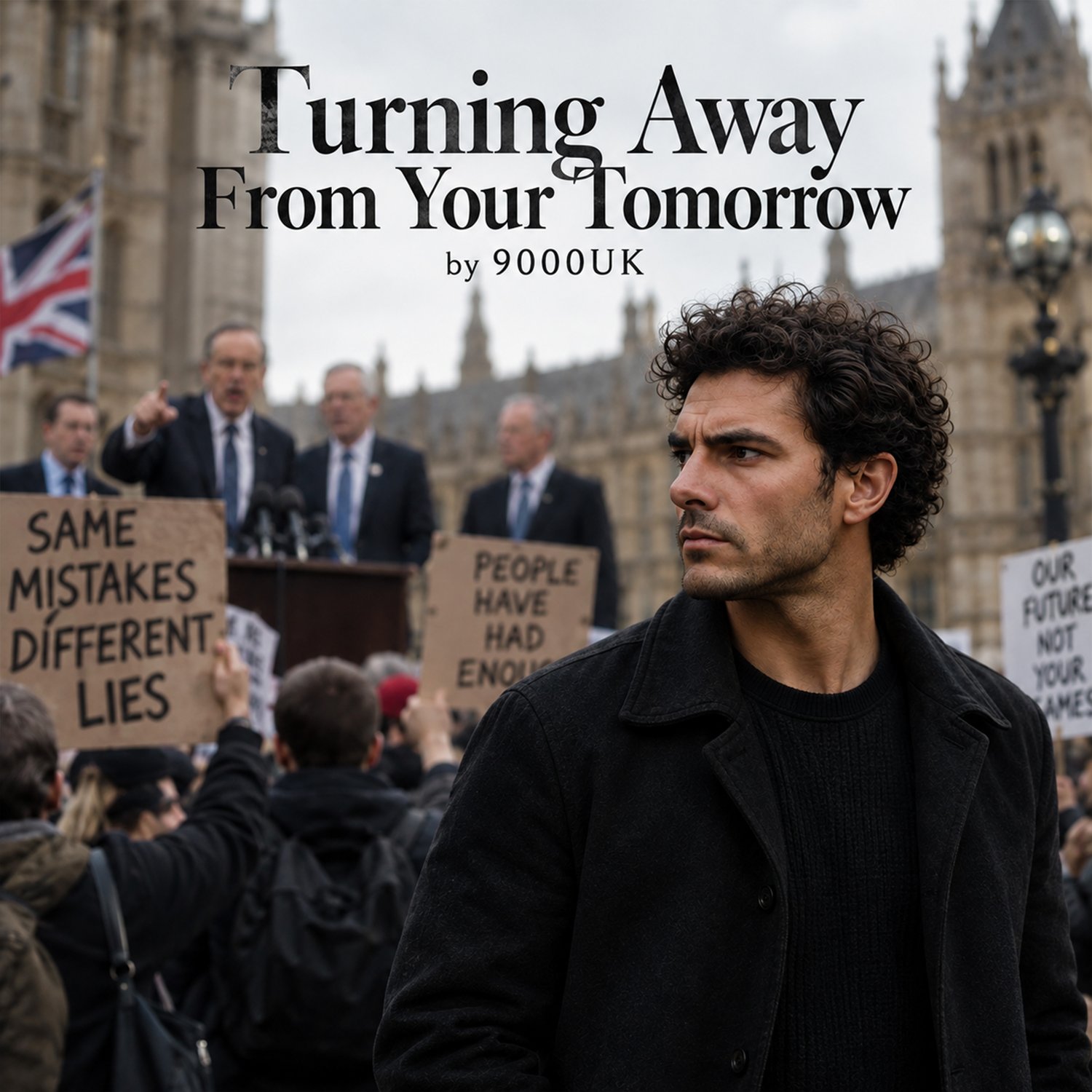
Turning Away from Your Tomorrow
All options include the full track download.
Support levels are optional and appreciated.
“Turning Away From Your Tomorrow” is a soft rock declaration of independence from manipulation, guilt, and pre-written roles. From the opening image of “shadows” tracing the roads the other person follows, the song frames the relationship as a constructed reality—“borrowed truths” and “painted fate”—where one side controls the narrative and expects loyalty as a prop rather than a partner.
The core story is a boundary being drawn in real time. The narrator refuses to live inside a future designed by someone else: “futures shaped to fit your claims” and “maps that suit your story” suggest a dynamic where responsibility is shifted, outcomes are staged, and blame is weaponised. The lyric “then curse the fire when you spark the flames” captures the hypocrisy at the heart of it: the other person creates chaos, then condemns the consequences as if they were someone else’s fault.
Emotionally, the track moves from wary clarity to firm resolve. The repeated pre-chorus—“I hear the echoes in your call, but I won’t answer you at all”—isn’t cold; it’s protective. It communicates a deliberate refusal to re-enter the cycle, even when the pull of familiarity or pressure returns. This repetition functions like a mantra: the narrator is rehearsing a new boundary until it becomes unbreakable.
The chorus turns the song into a manifesto of self-possession. “Stand firm in the moment” is a rejection of fear-based future-tripping and coercion; it’s about protecting what remains “worth keeping” inside the self—dignity, peace, identity. The symbolism of “rules” twisting into “shackles” implies that what may have been presented as standards, expectations, or “how things should be” has become control. Even so, the narrator won’t beg, won’t perform remorse, and won’t play the role of the compliant character in someone else’s drama.
A crucial thread is moral separation. “I won’t stand as your witness when you cross another line” carries courtroom weight—refusing complicity, refusing to validate wrongdoing, refusing to be used as credibility. “No, I won’t carry your burden just because you call it ‘mine’” exposes emotional outsourcing: the other person renames their mess as shared responsibility. The narrator’s refusal is the turning point—this is where the song shifts from heartbreak to liberation.
Verse 2 deepens the sense of inevitability: “I’ve seen the ending long before” suggests pattern recognition, the slow realisation that apologies and pledges are fragments rather than change. The “different harbours” image contrasts safety and stability against “storms you still ignore,” portraying the narrator’s exit not as abandonment, but as survival and growth.
Verse 3 makes the power dynamic explicit: “your stage is set, your lines rehearsed.” The relationship becomes theatre—scripted conflict, predictable emotional beats, and a cast list where the narrator is expected to play a supportive role. “Cross out my name from your arrangements” is both practical and symbolic: cut the ties, remove access, end the entitlement. The outro seals the transformation—turning away isn’t just leaving someone; it’s “finally choosing life that’s mine,” a clean, self-authored future that replaces the one imposed.
Overall, the song’s tone is resolute, defiant, and quietly triumphant—less about revenge, more about reclaiming agency. It’s a boundary anthem for anyone who has been asked to carry blame, play witness, or live inside someone else’s version of the story—and decided to step aside and begin again.