
Friend Request
All options include the full track download.
Support levels are optional and appreciated.
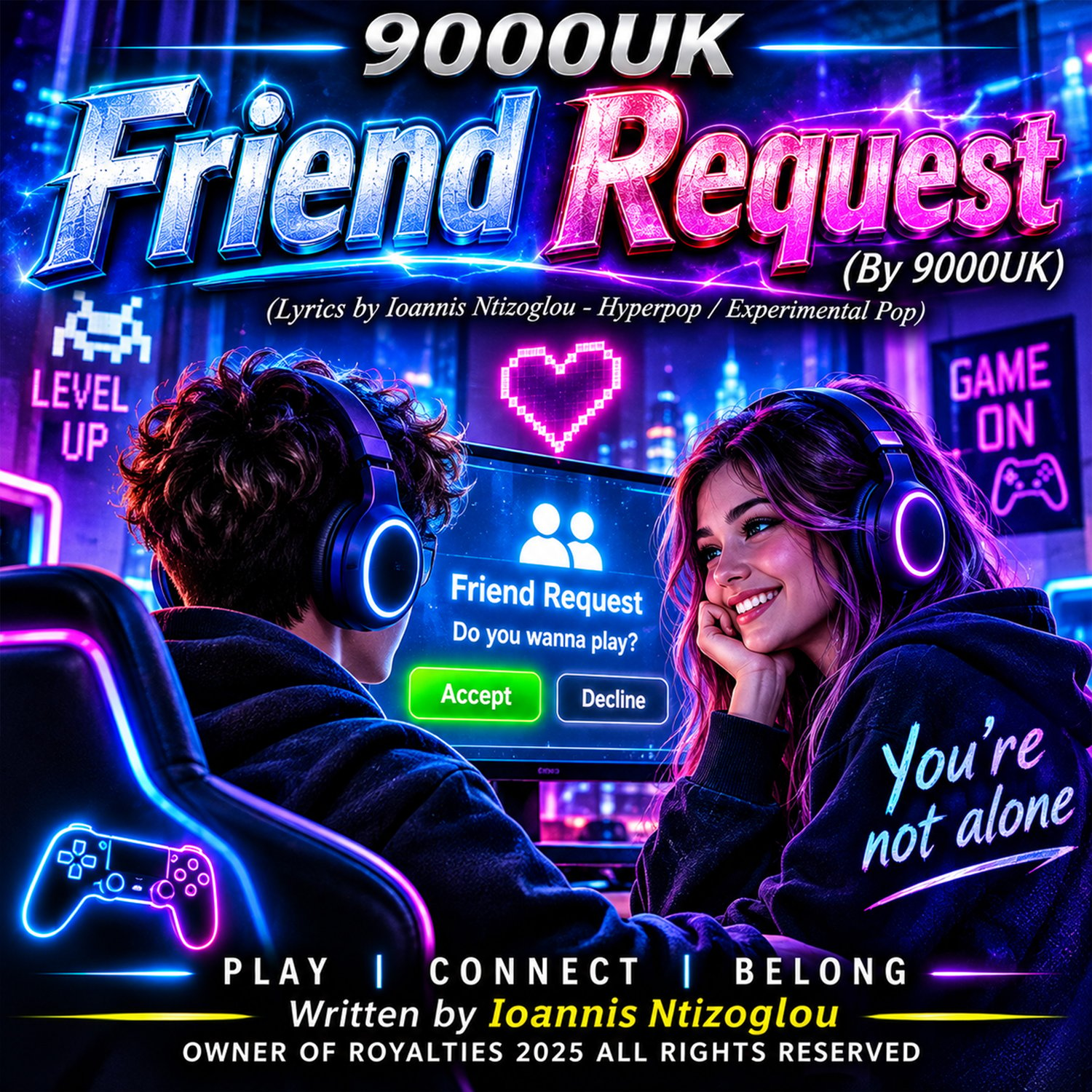
Friend Request by 9000UK is a Hyperpop and Experimental Pop song about loneliness, online friendship and the unexpected emotional connections formed through video games. Using the language of gaming, digital communication and virtual worlds, the lyrics tell the story of someone struggling with isolation who finds comfort in a stranger encountered during an online multiplayer session. What begins as a simple friend request gradually becomes a meaningful relationship, challenging the assumption that connections formed through screens are less authentic than those experienced face to face.
The introduction opens with the familiar sound of a digital notification. A single incoming request interrupts the narrator's private world, creating the possibility of an encounter with someone entirely unknown. The setting is described through images of a game, a fragmented digital environment and a personal space shaped by technology. This establishes a character whose emotional experiences are closely connected with online life.
The narrator's decision to accept the request introduces an element of vulnerability. Allowing a stranger into a private gaming space involves uncertainty, particularly when neither person knows much about the other. Yet the description of people as pixels within electric skin suggests that digital identities still contain genuine human feelings. The virtual environment becomes a place where real emotional experiences unfold behind avatars and usernames.
The first verse introduces the narrator's struggles through gaming terminology. Spawning into a lobby at midnight suggests a familiar routine of late-night gaming, while fighting demons every night carries a double meaning. Within the game, the demons might be enemies or challenges. Outside it, they suggest anxiety, painful thoughts or emotional difficulties.
The reference to a depleted health bar develops this metaphor. The narrator feels close to exhaustion but remains determined to continue. Life appears slow and difficult, while the rapid movement of fingers across the controls provides a contrasting sense of activity and purpose. Gaming offers an environment where immediate decisions and visible progress temporarily replace the uncertainty of everyday life.
The arrival of a message asking to form a squad becomes the narrative's first turning point. A stranger offers cooperation rather than competition, transforming an individual struggle into a shared experience. The gaming invitation represents more than assistance with a mission. It becomes an unexpected gesture of inclusion.
The image of being revived is especially important. In multiplayer games, reviving another player restores their ability to participate after defeat. Here, the action becomes a metaphor for emotional support. The stranger helps the narrator recover from a difficult moment, creating a sense of gratitude and belonging that extends beyond the game itself.
The pre-chorus explores the emotional significance of repeated failure and recovery. Levelling up and down represents the unpredictable movement between progress and setbacks. The request to respawn after drowning expresses a desire for someone dependable during moments of emotional difficulty.
The narrator also acknowledges a limited willingness or ability to communicate verbally. Despite speaking little, the connection feels genuine. The headset becomes a bridge between physical separation and emotional closeness, illustrating how shared experiences sometimes communicate reassurance more effectively than lengthy conversations.
The chorus transforms the friend request into a symbol of acceptance. The invitation to play represents an opportunity to escape isolation and experience companionship. Accepting the request becomes associated with relief from emotional pain, although the lyrics present this through the narrator's personal experience rather than suggesting that gaming eliminates underlying difficulties.
The image of an 8-bit heart in a 4K world creates one of the song's most distinctive contrasts. Eight-bit imagery evokes simplicity, early video games and limited graphical detail, while 4K represents the sharpness and complexity of modern digital environments. The narrator's heart feels small, imperfect or outdated within a world demanding increasingly polished appearances.
This contrast suggests a person who struggles to feel adequate in contemporary social life. Yet the stranger recognises the individual behind the digital imperfections. The relationship develops through acceptance rather than appearance, social status or performance.
The chorus also highlights the unusual intimacy of connecting with someone whose real name remains unknown. The narrator finds emotional relief through a relationship built upon shared actions and consistent presence. Glitches and lag become metaphors for imperfections in communication. Despite interruptions and technical limitations, the connection survives.
The declaration of feeling perfect within the game is particularly revealing. The narrator experiences a sense of belonging that appears absent elsewhere. This perfection is subjective and temporary, reflecting the emotional freedom of being accepted without the expectations associated with offline identity.
The second verse deepens the relationship between gaming and psychological experience. A shaking controller mirrors unsettled thoughts, connecting physical interaction with emotional tension. The image of a memory card filled with battles suggests an accumulation of difficult experiences, both inside and outside the virtual world.
The reference to repetitive messages of good game introduces a distinction between routine online communication and genuine personal attention. Generic messages might appear friendly without carrying much emotional meaning. By contrast, a simple greeting from the stranger produces a powerful response because it feels directed towards the narrator as an individual.
The verse then examines the anonymity of online friendship. The other person is known through a gamer tag rather than a face, and the relationship is presented as free from immediate judgements about appearance or racial identity. This anonymity creates room for interaction based on behaviour, shared interests and the willingness to support one another.
The stranger's decision to remain after the narrator rage quits becomes another defining moment. Leaving a game in frustration might normally end the interaction, but the message inviting the narrator to return demonstrates patience and continued interest. Its emotional importance lies in the reassurance that a difficult moment has not destroyed the connection.
The bridge shifts from the practical details of gameplay towards the narrator's changing sense of identity. Pausing pain and resuming the night suggests that gaming provides temporary relief from personal struggles. The digital rain creates a dreamlike atmosphere, blurring the boundaries between the emotional and virtual environments.
Pressing start and forgetting one's name introduces the possibility of escaping the expectations attached to everyday identity. Within the game, the narrator is not defined by previous disappointments or social difficulties. The discovery of a soul inside the virtual world expresses the surprising experience of feeling more understood through a digital connection than through familiar offline relationships.
This moment also introduces a subtle tension. Gaming offers belonging and emotional relief, but the desire to forget one's identity suggests that the narrator might also be using the virtual world to avoid painful circumstances. The lyrics do not fully resolve this contradiction. Instead, they present digital friendship as both a meaningful source of support and a refuge from difficult emotions.
The breakdown returns to the sound of incoming notifications, echoing the introduction. This time, the narrator faces a choice between declining another invitation and allowing emotional connection to continue. The question suggests that accepting friendship involves vulnerability, particularly for someone accustomed to isolation.
The description of communicating through clicks rather than conversation reinforces the song's central idea. Shared gameplay becomes its own language. Cooperation, patience and returning to play together communicate affection and trust without requiring conventional expressions of friendship.
The final chorus develops the relationship from tentative acceptance into open appreciation. Completing quests and defeating enemies together symbolises mutual support through shared challenges. The stranger is no longer simply another player, but someone whose presence has become emotionally significant.
The image of the heart respawning whenever the friend logs back on connects digital activity with emotional renewal. Each return offers reassurance that the relationship continues. The narrator's enthusiasm reflects the comfort of knowing someone is willing to share time and attention.
The declaration that the online friend feels more real than others provides the song's strongest challenge to conventional assumptions about relationships. Physical proximity does not automatically create understanding, while geographical distance does not prevent genuine care. The narrator values consistency, acceptance and companionship above the traditional markers of familiarity.
The outro completes the narrative with a confirmation that the request has been accepted. The final admission of no longer feeling alone gives the song a clear emotional resolution. A small digital interaction has developed into a relationship capable of changing the narrator's experience of isolation.
Friend Request uses the vocabulary of multiplayer gaming to tell a recognisably human story. Health bars, respawning, lobbies, chatboxes, gamer tags and notifications become metaphors for emotional exhaustion, resilience, vulnerability and friendship. The contrast between technological language and deeply personal feelings suits the song's Hyperpop and Experimental Pop identity.
Its central message is that meaningful companionship depends upon how people treat one another rather than where they meet. The lyrics celebrate the emotional importance of being included, remembered and supported, particularly when ordinary social environments feel distant or unwelcoming.
Ultimately, Friend Request is a story about finding connection in an unexpected place. Behind the pixels, glitches and virtual battles are two people whose shared experiences create trust. What begins with a notification ends with a renewed sense of belonging, showing how a simple invitation to play might become the beginning of a friendship that matters.