

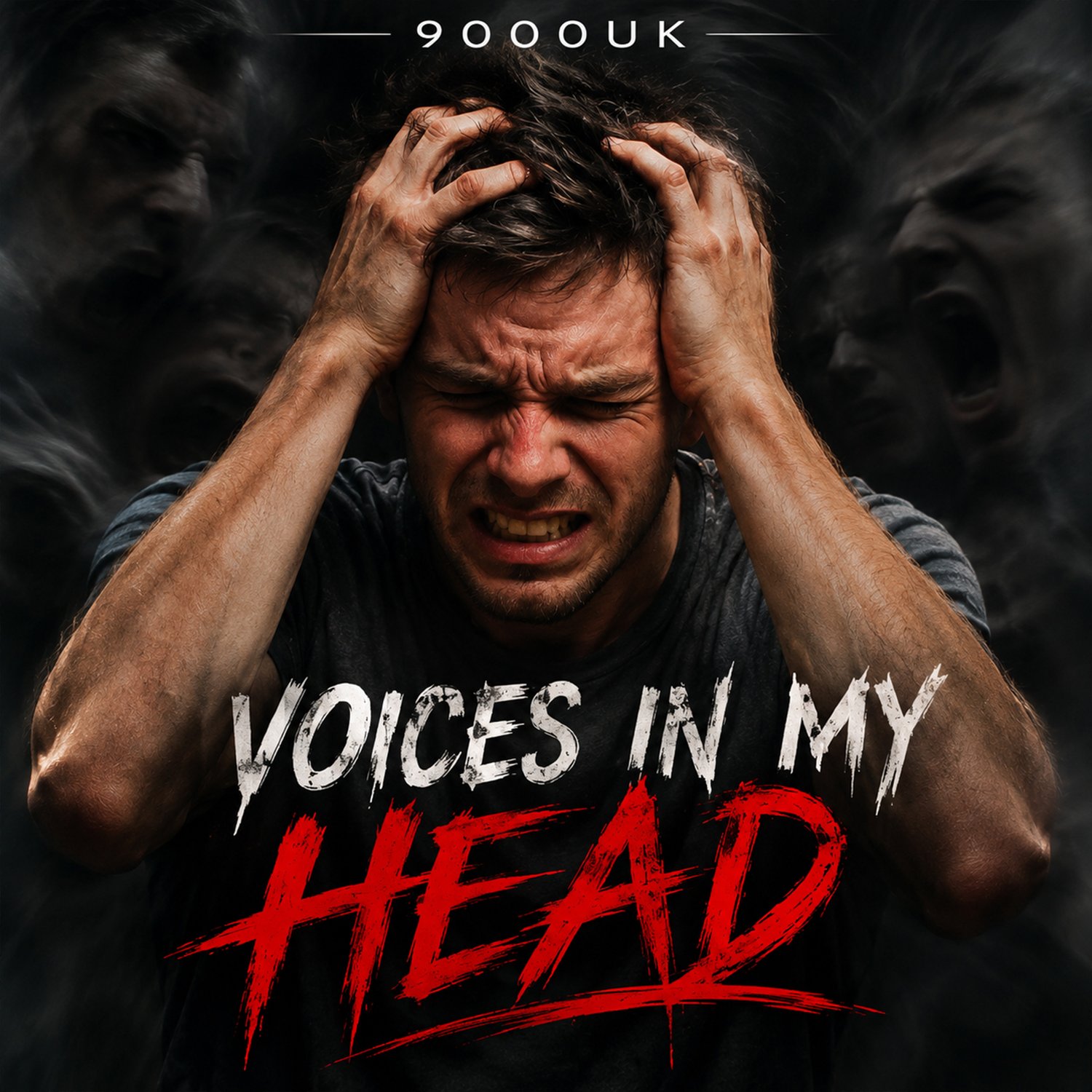
Voices in My Head
All options include the full track download.
Support levels are optional and appreciated.
Voices in My Head is a dark trap exploration of psychological torment, fractured identity and the frightening experience of losing control over one's own inner world. The lyrics follow a narrator surrounded by relentless, contradictory voices that interrupt sleep, undermine self-confidence and issue increasingly disturbing commands. Through images of moving shadows, distorted reflections, supernatural figures and overwhelming mental noise, the song creates a claustrophobic portrait of someone struggling to distinguish personal thoughts from hostile internal influences. Its central tension lies in the narrator's inability to find silence, reassurance or a stable sense of self.
The introduction immediately places the listener inside this oppressive mental environment. The narrator describes an unbearable level of noise, accompanied by sleeplessness and difficulty breathing. These short declarations establish distress before the voices themselves are introduced. The sudden instruction to listen creates an unsettling contradiction: the protagonist desperately needs quiet, yet directs attention towards the very sounds causing the suffering. This opening establishes the song's intimate perspective, with the listener positioned as a witness to an experience occurring largely within the narrator's mind.
The first verse presents the voices as persistent and invasive. They appear to whisper from the darkness while producing sensations that extend into the narrator's chest, suggesting that the distress affects both thoughts and physical experience. Their messages attack identity and personal worth, describing the protagonist as a ghost or a threat and predicting death regardless of what action is taken. These statements are presented as the voices' hostile claims, rather than reliable descriptions of reality.
The ticking clock introduces the pressure of passing time, while thickening blood and arguing shadows heighten the atmosphere of bodily discomfort and perceptual confusion. The narrator's account of remaining awake for an extended period adds another dimension to the disorientation. The room appears to spin, and ordinary surroundings begin to resemble a ritualistic environment. These images suggest an increasingly unstable experience of reality without establishing whether the disturbances are literal, imagined or part of the song's horror-inspired symbolism.
The chorus reveals the full extent of the voices' contradictory demands. Some urge escape or concealment, while others call for destruction, distrust and self-destructive behaviour. The instruction to break a mirror introduces the idea that the narrator feels trapped within an unwanted reflection or version of the self. The mirror becomes more than a physical object. It represents the unsettling possibility that the person looking back is no longer recognisable.
The commands involving fire, graves and ending one's life intensify the threatening nature of the internal conflict. Their purpose within the narrative is to demonstrate the danger and cruelty of the voices, not to establish those instructions as reasonable or desirable. The protagonist is confronted with competing demands that offer no coherent direction. Even the apparent choice between giving up and continuing becomes another source of torment because it arrives through the same intrusive chorus of voices.
The final line of the chorus introduces a particularly mysterious emotional detail. The narrator observes that none of the voices resemble a specific person addressed as you. The identity of this person remains unexplained. It might suggest someone remembered, trusted, loved or missed, creating a contrast between the hostile internal voices and an absent source of familiarity. This brief reference adds emotional depth to the otherwise threatening imagery, implying that the narrator recognises a difference between the voices and a meaningful human connection.
The second verse gives the voices distinct personalities through the image of demons with names. Their familiarity with the narrator suggests an intimate knowledge of personal fears and vulnerabilities. Describing them as feeding on pain portrays suffering as something that strengthens their influence. The contrasting commands associated with affection and violence reveal the instability of the internal environment, while a third voice merely hums during moments of stillness. This quieter presence is no less unsettling because it suggests that the disturbance continues even when overt threats temporarily stop.
Television static and the image of a brain on fire communicate sensory overload, while dreams bound together with barbed wire portray sleep as another source of distress rather than escape. The narrator's reaction to breathing walls and moving curtains is especially revealing. Instead of expressing surprise, the protagonist responds with apparent resignation. What would ordinarily seem extraordinary has become familiar within this disturbed environment.
This change in response suggests emotional exhaustion. The narrator is no longer reacting to every unsettling experience with immediate alarm, but has begun to accept the disturbances as part of everyday existence. The verse therefore shifts the focus from sudden fear towards the more troubling consequences of prolonged exposure to an uncontrollable inner conflict.
The bridge brings the narrator's crisis of identity into the foreground. The admission of no longer knowing who they are reveals that the voices have affected more than emotional comfort. They have begun to undermine the narrator's understanding of personal identity. Voices positioned at the front and back of the mind create the impression of being surrounded internally, with competing forces demanding attention from every direction.
Comparing the voices to gods of war gives them exaggerated authority and aggression. They appear to speak as though they possess the power to dictate the narrator's actions and fate. The reference to prayer introduces a search for relief beyond the self, yet the narrator experiences silence rather than reassurance. This contrast is significant because silence is both desperately desired and painfully absent where comfort is sought. The voices remain active, while the hoped-for answer from heaven never arrives.
The narrator's admission of telling personal lies to keep moving suggests an attempt to preserve some appearance of control. Yet the bridge ends by acknowledging the impossibility of escaping what exists within the mind. External flight offers no solution to an experience that follows the protagonist everywhere.
When the chorus returns, its commands take on greater significance following the bridge's crisis of identity. The listener now understands that the voices threaten the narrator's sense of self as well as emotional stability. Their laughter, screaming and conflicting instructions form a hostile internal environment in which no single direction feels trustworthy.
The outro provides no conventional resolution. The whispers briefly fade, but their disappearance does not produce peace or rest. The narrator remains alone with the knowledge that the voices are still part of the experience. The final declaration places the self and the voices side by side, suggesting an unresolved coexistence rather than recovery or escape.
Voices in My Head draws its distinctive identity from the combination of psychological horror, conflicting internal commands and deeply personal uncertainty. Its dark trap framing complements the lyrical emphasis on fear, disorientation and oppressive mental imagery, while the repeated chorus reinforces the exhausting recurrence of unwanted thoughts and voices. The lyrics portray an experience of severe psychological distress without specifying a clinical diagnosis or presenting the supernatural imagery as established fact.
The song ultimately examines the fear of becoming a stranger to oneself. Mirrors, shadows, demons and static represent different expressions of an inner world that feels increasingly unfamiliar and hostile. By ending without relief, the narrative preserves its central horror: the protagonist has nowhere to retreat from the disturbance because the threatening voices are experienced within the very mind searching for escape.